Caring for a laminate closet: cleaning and adjusting
The short answer
Wipe it with a soft, damp cloth and a little mild soap, and dry it. A week after it goes up, and every few months after, check the wall screws and connectors are tight. A door out of line is a hinge to adjust, not a part to force.
- A soft cloth, warm water and a drop of dish soap clean thermally fused laminate. Skip scouring pads and harsh solvents.
- Wipe up water quickly, especially on the edges, and keep the closet out of steady damp.
- Check the wall screws and connectors a week after it’s built, then every few months.
- Each door hinge adjusts three ways with a #2 Phillips, so you can set the gaps even.
Cleaning
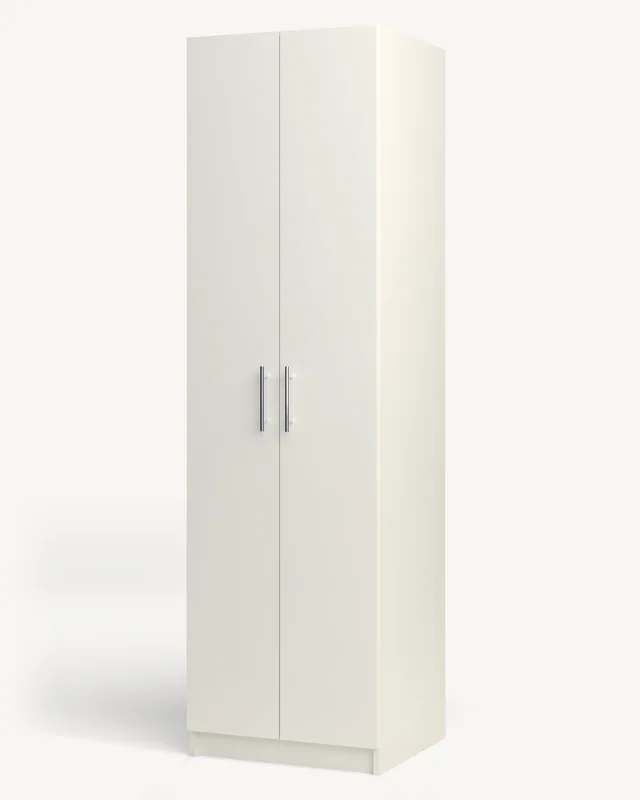
Every surface of our closets is thermally fused laminate, a hard, sealed face that is part of the board, with matching banded edges. It needs very little:
- Dust with a dry microfiber cloth.
- Wipe marks with a soft cloth wrung out in warm water with a drop of dish soap, then dry it.
- Avoid scouring pads, abrasive powders and harsh solvents. They can dull or scratch the surface.
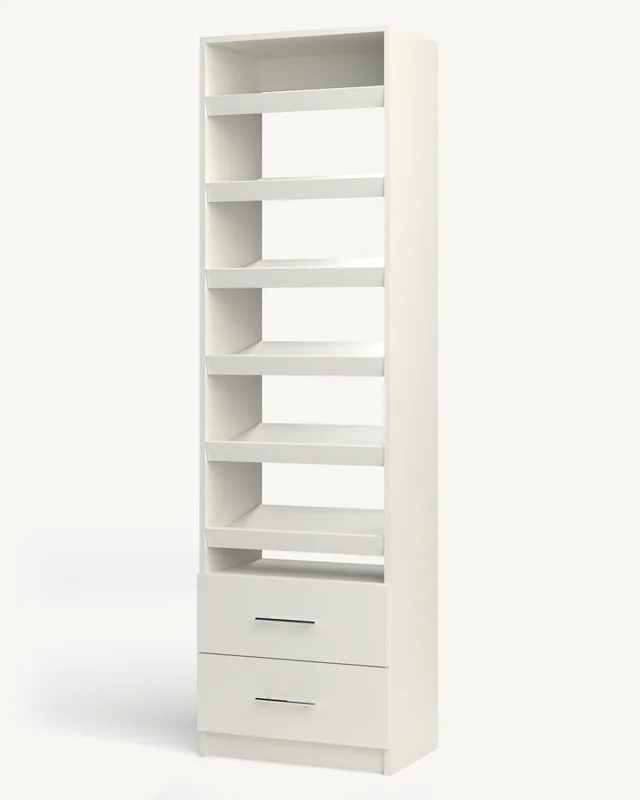
Shoe shelves collect grit. Lift them off their pins now and then and wipe them on both sides.
Water and sun
The laminate face shrugs off a spill, but the board under it doesn’t like standing water. Wipe up anything wet quickly, especially along the edges and at the floor, and don’t put a wet umbrella or damp towels away in a drawer. A closet that shares a wall with a shower should be well ventilated.
Strong sunlight over years can fade any finish. In a closet that’s rarely a worry; on a bedroom wall of wardrobe cabinets opposite a big window, a blind helps.
Two checks after a week
A week after your closet is built, and every few months after that, take a few minutes to:
- Check the wall screws. Give the top of each cabinet a firm pull. It shouldn’t move at all. If it does, tighten the screws through the back rails into the studs.
- Check the connectors. Look along the joints of each cabinet. If one has opened, tighten its connector with the connector bit until it pulls tight; don’t overdrive it.
Setting a door straight
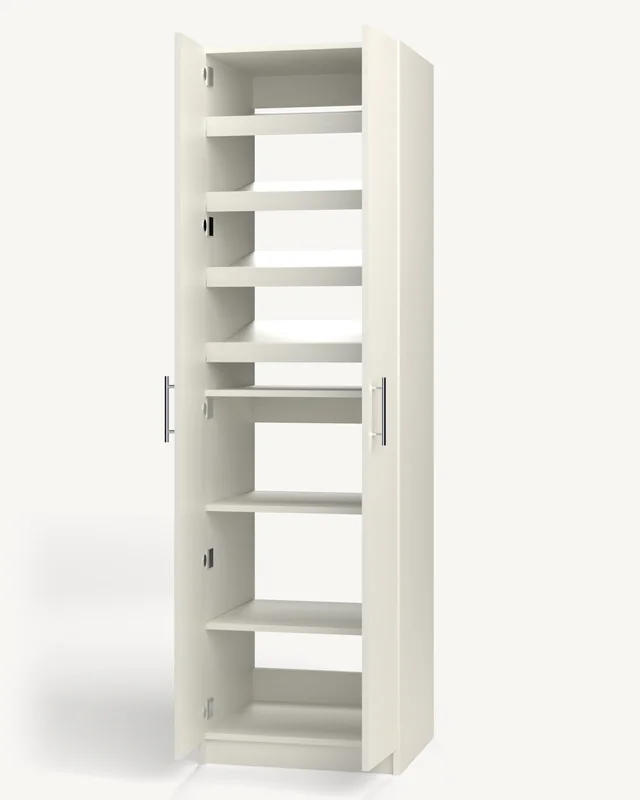
Doors settle a little as a house does. Each hinge on our wardrobe cabinets adjusts three ways with a #2 Phillips screwdriver:
- Side to side: the screw nearest the door. Use it to even the gap between a pair of doors.
- In and out: the screw at the back of the hinge arm. Use it when a door’s edge stands proud of the cabinet.
- Up and down: the cam on the plate fixed to the cabinet side. Use it to line a door up with its neighbor.
Turn a little at a time, and adjust the top and bottom hinges together. To take a door off, press the release at the back of the hinge arm and lift it away; it clicks back on the same way.
Drawers, shelves and rods
Every drawer runs on soft-close slides that pull all the way out, rated for 100 pounds. Keep heavy things low in the drawer bank, and if a drawer starts to rub, look for something caught behind it before anything else. A drawer pull that loosens just needs its screws tightened from inside the drawer.
Shelves and shoe shelves sit on pins and move whenever you like: take everything off, lift the shelf out, move its four pins to the new height, all four level, and lay it back. A season change is a good time to do it, with summer things up high in winter, and the other way round.
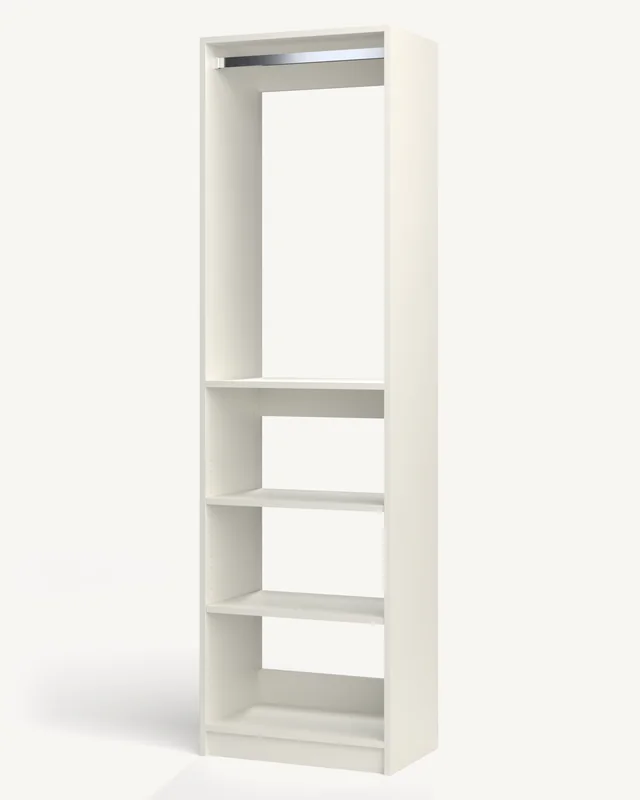
Rods sit in supports screwed to the cabinet sides. If a rod rattles, check the support screws.
What the warranty covers
Our lifetime limited warranty is for the person who bought the closet. It covers the moving hardware, the cabinets and the factory finish against defects in the materials and the work, and that includes a closet you put together yourself, from the day it’s delivered.
It doesn’t cover normal wear, scratches and dents, fading, misuse, accidents, changes made to it, finishes you add, too much moisture or sun, or use in a business or a rental, and it doesn’t pass to a new owner. If something’s wrong, take photos and get in touch; we repair or replace what’s covered.
Questions we get
How do I clean a melamine closet?
With a soft cloth wrung out in warm water and a drop of dish soap, then dry it. Avoid scouring pads, abrasive powders and harsh solvents.
How do I fix a closet door that doesn’t line up?
Each hinge adjusts three ways with a #2 Phillips: side to side with the screw nearest the door, in and out with the screw at the back of the arm, and up and down with the cam on the plate. Turn a little at a time.
Can I move the shelves after the closet is built?
Yes. Shelves and shoe shelves sit on pins. Take everything off, lift the shelf out, move its four pins to the new height and lay it back.
Is my closet covered if I built it myself?
Yes. The warranty covers the materials and hardware on a closet you assemble yourself, from the day it’s delivered. The assembly and installation themselves are yours.
Ready to plan yours?
Lay out your closet cabinet by cabinet and see it priced live, built to the measurements you give us.